


04 Feb The 4 Types of Fractional CMO Agencies (And Why It Matters for Your Business)
When the fractional CMO trend started several years ago, I thought I understood the market. A fractional CMO was supposed to be a senior marketing executive working part-time for multiple clients—simple enough, right?
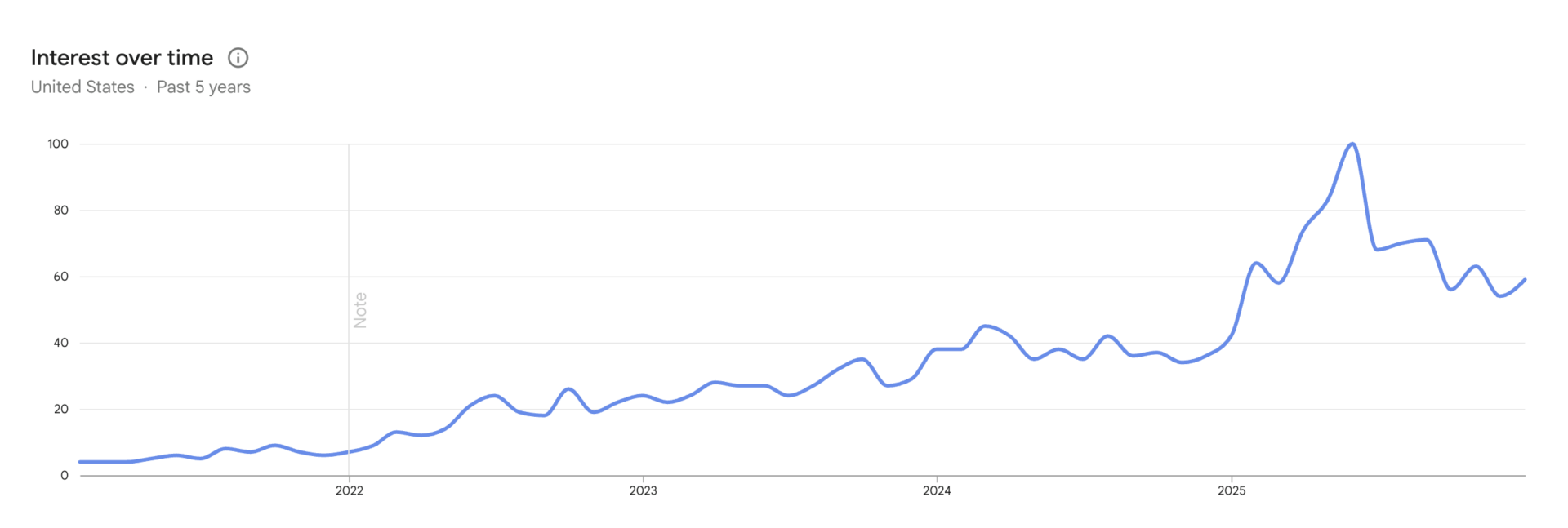
As time as passed, what I discovered was messier and more nuanced than any industry overview let on. The term “fractional CMO agency” has become an umbrella for wildly different business models, each with distinct advantages and serious limitations. If you’re evaluating options for senior marketing leadership, understanding these differences could save you six figures and months of wasted effort.
Why the Fractional CMO Market Defies Easy Categories
The fractional CMO model emerged from a real gap in the market. Growing companies needed C-level marketing strategy but couldn’t justify (or afford) a $250K+ full-time executive. Early adopters were genuinely experienced CMOs who’d left corporate roles and wanted flexibility while leveraging their expertise across multiple businesses.
That was 2015. Fast forward to today, and “fractional CMO” has become one of the most diluted terms in B2B services. I’ve seen digital marketing coordinators with five years of experience calling themselves fractional CMOs. I’ve watched agencies rebrand their account managers as “fractional marketing executives” without changing a single deliverable.
The problem isn’t just terminology inflation—it’s that businesses shopping for fractional CMO services often can’t tell the difference until they’re three months into an engagement that’s clearly not working.
Type 1: The True Solo Practitioner
These are actual former CMOs running one-person operations. They typically work with 3-5 clients simultaneously, charging anywhere from $5,000 to $20,000 per month depending on scope and their background.
What you’re actually getting: Direct access to someone who’s held the CMO title at companies you’ve heard of. They’ve managed teams, owned P&L responsibility, reported to CEOs and boards, and navigated the political complexity of executive leadership. When they show up to your leadership meeting, they’ve been in that room before.
The upside: You’re working with the person you hired. No bait-and-switch. Their expertise is their product, and their reputation depends on your results. Most solo practitioners are selective about clients because they can’t scale beyond their available hours, which means if they take you on, they believe they can move the needle.
The reality check: You’re getting strategic guidance and oversight, not execution. A solo fractional CMO might develop your go-to-market strategy, audit your marketing team’s performance, or rebuild your demand generation model—but they’re not running your Facebook ads or writing your blog posts. You’ll need an internal team or outside vendors to execute their strategies.
Some solo practitioners have grown so successful that they’ve actually become Type 2 agencies, though many resist scaling specifically because it changes the nature of the work and the client relationship.
Type 2: Fractional CMO Agencies with Full-Time CMO-Level Employees
This model represents the professionalization of fractional CMO services. These agencies employ multiple senior marketing executives as W2 employees (or equivalent), each serving a portfolio of 2-4 clients. Think of it as a consulting firm focused specifically on fractional marketing leadership.
What you’re actually getting: You’re matched with a CMO from their roster based on industry experience, company stage, or specific expertise (B2B SaaS, healthcare, manufacturing, etc.). That person becomes your dedicated fractional CMO, supported by the agency’s methodology, frameworks, and sometimes additional resources.
The upside: Better accountability and consistency than solo practitioners. If your fractional CMO leaves or isn’t the right fit, the agency can transition you to someone else without starting from scratch. Many of these firms have developed proprietary processes for common fractional CMO deliverables—90-day marketing plans, team audits, tech stack assessments—that create faster time-to-value.
The W2 model also means these CMOs aren’t juggling the administrative overhead of running their own businesses. They can focus more attention on client work.
The complexity: These agencies need to charge enough to cover employee salaries, benefits, and overhead while remaining competitive with solo practitioners. Monthly retainers typically start around $8,000-$12,000 and can exceed $25,000 for more intensive engagements. You’re paying for the infrastructure and systems, which only makes sense if you value that stability.
Quality control is the other variable. Some fractional CMO agencies maintain rigorous hiring standards and only bring on executives with legitimate CMO experience. Others have loosened the definition to scale faster, which brings us back to the credentialing problem.
Type 3: The Freelance Network Model (Or: Fractional CMO Agencies in Name Only)
This is where the market gets murky. These agencies position themselves as fractional CMO providers but operate more like matchmaking services or staffing agencies. They maintain a network of independent contractors—some with strong credentials, some without—and connect them with clients under the agency’s brand.
What you’re actually getting: A contractor who may or may not have held a CMO role, managed by an agency that may or may not provide meaningful oversight. The quality variance is enormous. I’ve seen network models that vet contractors carefully and provide real support, and I’ve seen others that are basically lead generation engines where anyone willing to pay a referral fee can join the network.
The upside (when it works): Lower costs, sometimes. Because contractors typically earn less than W2 employees for the same work, these agencies can offer competitive rates. The best network models also offer geographic or niche specialization that smaller agencies can’t match—they might have a deep roster of fractional CMOs with specific expertise in e-commerce, healthcare compliance, or manufacturing.
The red flags: The agency’s role is often limited to the initial match. Once you’re paired with a contractor, you’re essentially working with a solo practitioner, but without the benefit of having vetted them yourself. If the relationship doesn’t work, the agency may swap in someone else, but you’re restarting the learning curve.
The bigger issue is incentive misalignment. In true network models, the agency’s primary customer is often the contractor (who pays to access clients), not you. Customer service tends to reflect that.
Type 4: Digital Marketing Agencies Wearing a CMO Hat
This is the most common—and most misleading—variant in the market right now. These are traditional digital marketing agencies or execution shops that have rebranded their senior account leads as “fractional CMOs” or “fractional marketing directors.”
What you’re actually getting: A digital marketing director or agency account manager, often with solid tactical experience in channels like paid search, SEO, or paid social, but limited strategic or executive experience. They’re typically supported by (or managing) execution teams that may be in-house, outsourced domestically, or offshore.
The pitch: These agencies sell a compelling vision: you get strategic leadership AND execution in one package. Your “fractional CMO” develops the strategy, and their team executes it. No need to coordinate multiple vendors.
Why it falls apart: The person leading your account rarely has actual CMO experience. They may have run campaigns or managed marketing managers, but they haven’t operated at the executive level—which means they’re missing the strategic toolkit and business acumen that defines effective fractional CMO work.
More problematically, the incentive structure is backwards. A true CMO’s job includes evaluating whether you’re overspending on agencies and vendors. When your fractional CMO works for an agency that makes money from execution services, recommending that you scale back Facebook ads or renegotiate with vendors creates an internal conflict.
I’ve talked to three business owners in the last year who signed contracts with this type of agency thinking they were getting a fractional CMO, only to realize six months in that they’d hired a marketing agency with a fancier title structure.
The tell: If the fractional CMO agency is also pitching you on SEO services, PPC management, website development, or content creation as core offerings, you’re almost certainly looking at Type 4.
How to Evaluate Fractional CMO Agencies for Your Business
The challenge isn’t just identifying which type of fractional CMO agency you’re considering—it’s figuring out which model actually serves your needs. Here’s what I’d focus on:
Ask about the person, specifically. Don’t just ask about the agency’s capabilities. Ask: “Who would be my fractional CMO? What companies have they worked at in a CMO capacity? Can I speak with them before signing?” If the agency can’t answer these questions clearly, that’s your answer.
Understand the scope boundaries. Be direct: “What will you do, and what will I need to handle separately?” If they’re evasive about what’s included versus what costs extra, or if the scope seems to include everything from strategy to Instagram captions, dig deeper.
Look for evidence of strategic work. Ask for examples of frameworks they use, strategic deliverables from past clients (redacted, obviously), or their approach to specific challenges relevant to your business. A fractional CMO should be able to articulate how they’d diagnose your marketing operation before proposing solutions.
Check for conflicts of interest. Ask explicitly: “Do you offer execution services? Do you receive referral fees from vendors you recommend? How do you handle situations where the strategic recommendation is to spend less on marketing?” The best fractional CMOs are comfortable with these questions because they’ve thought through their own guardrails.
Validate credentials, don’t just accept titles. LinkedIn is your friend here. Look up the person who’d be your fractional CMO. Have they actually held that title? For how long? At what kind of companies? If their career history is primarily execution roles, that’s not necessarily bad—but you should know that going in.
What This Means for the Future of Fractional CMO Services
The fractional CMO market is maturing, which means we’re probably due for some consolidation and clearer segmentation. I expect the Type 4 agencies will eventually drop the fractional CMO positioning (or get called out enough that it stops working), while Types 1-3 will likely converge around clearer value propositions and pricing models.
For now, though, buyer awareness is the only quality control mechanism. The businesses that get real value from fractional CMO agencies are the ones who understand what they’re buying and from whom.
If you’re evaluating fractional CMO agencies, your best defense is asking harder questions upfront. Don’t accept vague answers about “strategic leadership” or “executive-level guidance.” Push for specifics. Ask to meet the actual person who’d do the work. Request references from clients with similar needs.
The right fractional CMO—whether solo or part of an agency—can completely transform your marketing trajectory. The wrong one is just an expensive consulting engagement that yields another strategic deck you’ll never implement.
Looking for guidance on whether a fractional CMO is right for your business, or need help evaluating specific agencies? I’ve helped dozens of companies navigate this decision. Feel free to reach out.